
A custom wine cellar has a reputation for being a six figure luxury, reserved for homeowners with unlimited budgets and unlimited square footage. That reputation doesn’t hold up once you look at how these projects actually come together. With the right priorities and an experienced team behind the design, it’s entirely possible to build a wine cellar or space that looks impressive, performs the way it should and stays within a realistic budget range.
The difference between an expensive cellar and a cost effective one usually comes down to where the money goes, not how much of it there is. Wine storage depends on a handful of fundamentals including stable temperature, consistent humidity, a sensible layout and of course solid construction. Get those right, and almost everything else becomes a matter of style rather than expense.
Build Where You Already Have Space
One of the most effective ways to manage costs is by making use of an existing area within the home, whether it’s an unused garage corner, under-stair void, spare room or a basement space (where homes have them), they all allow for a highly customised result.
Sizing the space correctly matters just as much as choosing it, and many homeowners default to building the largest cellar their space allows, on the assumption that bigger automatically means better value. In practice, a cellar sized to your current collection with some room to grow tends to perform better and cost less than one built purely to impress. Before settling on dimensions, it’s worth working through a few questions:
- How many bottles do you need to store today, and how quickly is that number likely to grow?
- Will the cellar need to accommodate different bottle formats, magnums, or display pieces?
- Is this primarily a storage space, a wine tasting space, bottle showcase
- Is the space suited to wine storage?
Our team of specialists can work though these questions (and more) with you, to ensure no wasted costs are incurred.
Where to Spend, and Where Not To
Some parts of a wine cellar are not the place to cut corners. Insulation, vapour barriers, and climate control systems are what keep wine stable, and skimping on them tends to cause problems years down the track rather than savings now. Most cellars need to sit somewhere around 12 to 15°C with relative humidity between 60 to 70%. New Zealand’s climate makes this more of a moving target than it might seem: a cellar in a humid coastal city has different demands than one in a drier inland region, and the cooling and insulation specification should reflect that rather than follow a generic template.
An insulated cellar also reduces the ongoing cost of running it. Energy efficient cooling units paired with proper insulation and a correctly fitted vapour barrier mean the system isn’t working overtime to hold a stable environment, which lowers both running costs and the risk of temperature swings that can damage wine over time.
Once those fundamentals are budgeted for properly, the remaining spend can flex around design choices, which is where a lot of the visual impact comes from anyway.
Materials That Look Premium Without the Premium Price Tag
Luxury in a wine cellar rarely comes down to the most expensive materials available. Quality timber, metal racking, glass panelling and well-placed lighting can create a sophisticated space without the cost of a fully bespoke build.
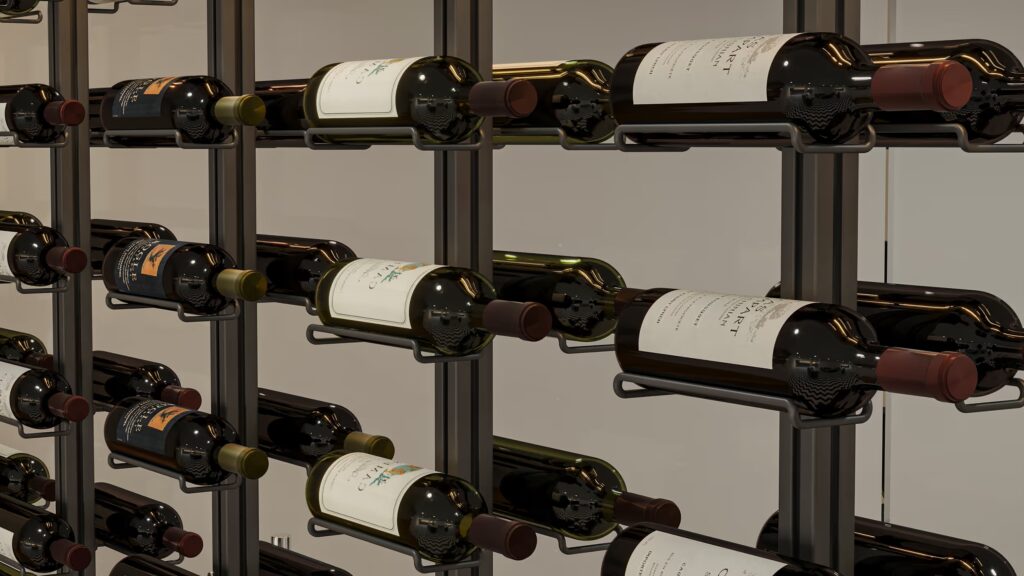
Racking is a good example of where smart choices pay off, while modular metal racking systems generally offer more flexibility and a lower cost per bottle than fully custom timber bins, while still looking considered and well-built. Many homeowners get the best of both by combining modular racking through most of the space with a smaller feature wall in solid timber which is enough to set the tone of the room without pricing out the whole project.
Choosing classic, durable materials is one of the smartest ways to maximise the value of your investment. So by focusing on quality materials and enduring design, your wine cellar is more likely to look just as impressive years from now, reducing the need for costly cosmetic updates in the future.
Plan Before You Build
The projects that go over budget are rarely the ones with expensive materials, they’re the ones without a clear plan. Working out your storage goals, collection size and design preferences before construction starts keeps decisions deliberate rather than reactive, and avoids the costly mid-build changes that come from figuring things out as you go.
This is also where bringing in an experienced wine cellar specialist earns its place in the budget. Getting the climate control sizing wrong or underestimating what a given structure can support, are the kinds of mistakes that are expensive to fix after the fact and straightforward to avoid with the right guidance from the outset. If you’re working out what’s realistic for your home, our team can talk you through the options and the actual costs involved in getting there.